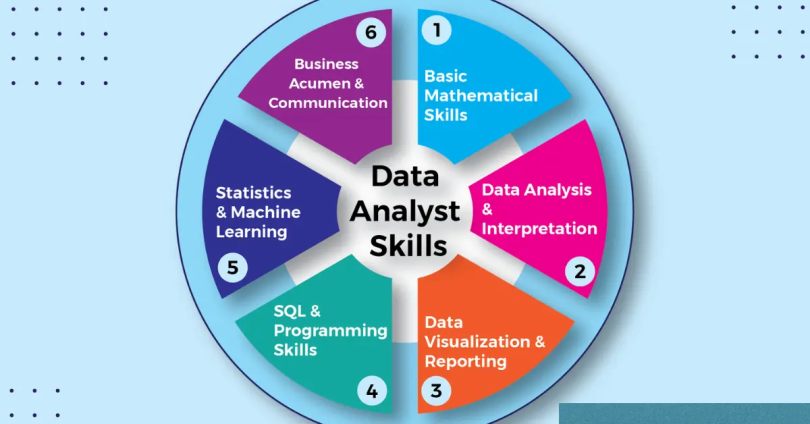

In today’s data-driven world, data analysis skills are no longer optional—they are essential for professionals across industries. From business decision-making to research and marketing, the ability to extract meaningful insights from raw data sets individuals and organizations apart. Developing strong data analysis skills empowers professionals to interpret complex datasets, identify trends, and make evidence-based decisions that drive results.
Understanding Data Analysis
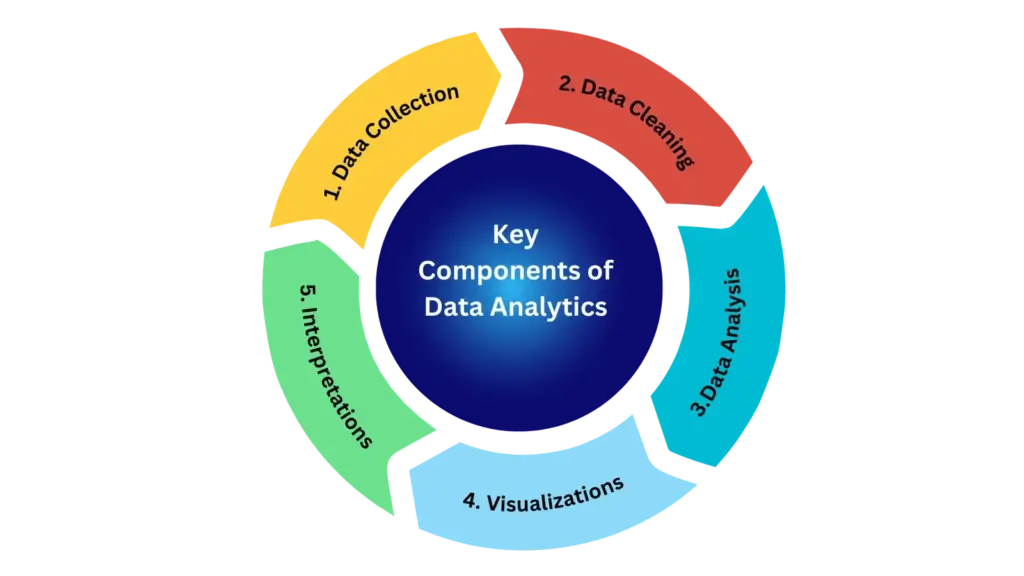
Data analysis is the process of inspecting, cleaning, transforming, and modeling data to uncover useful information, draw conclusions, and support decision-making. It combines technical skills, critical thinking, and domain knowledge to turn raw data into actionable insights. Effective data analysis requires precision, attention to detail, and the ability to interpret numbers in the context of business or research goals.
Core Data Analysis Skills
1. Statistical Knowledge
A fundamental component of data analysis is a strong grasp of statistics. Understanding concepts such as mean, median, mode, standard deviation, correlation, and regression analysis enables analysts to interpret data accurately. Statistical skills allow professionals to identify patterns, relationships, and anomalies within datasets.
2. Data Cleaning and Preparation
Before analyzing data, it must be cleaned and organized. Data cleaning involves removing duplicates, handling missing values, correcting errors, and standardizing formats. Proper data preparation ensures accurate results and prevents misleading insights. This skill is crucial because the quality of analysis depends entirely on the quality of data.
3. Data Visualization
Data visualization is the practice of representing data graphically to communicate insights clearly. Tools like Tableau, Power BI, and Excel help create charts, graphs, and dashboards. Visualization skills help analysts highlight trends, patterns, and key findings in a way that is understandable for stakeholders without technical expertise.
4. Technical Tools and Software Proficiency
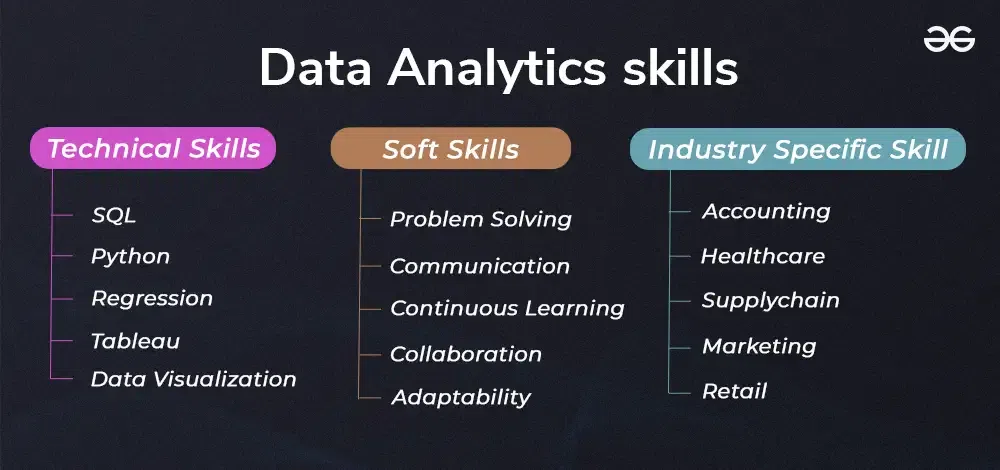
Proficiency in data analysis tools and software is essential. Key tools include:
- Excel: Fundamental for basic analysis, formulas, pivot tables, and charts.
- SQL: Essential for querying databases and retrieving structured data.
- Python & R: Popular programming languages for statistical analysis, automation, and machine learning applications.
- Power BI & Tableau: Advanced tools for visualization and business intelligence.
Being proficient in multiple tools allows analysts to adapt to various datasets and project requirements efficiently.
5. Critical Thinking and Problem-Solving
Technical skills alone are not enough. Analysts must apply critical thinking to interpret results and determine their relevance. Problem-solving skills allow professionals to identify issues, ask the right questions, and design strategies based on data-driven insights.
6. Attention to Detail
Data analysis requires meticulous attention to detail. Even small errors in data entry, calculation, or interpretation can lead to incorrect conclusions. Strong attention to detail ensures accuracy and reliability in reporting and recommendations.
7. Communication Skills
Communicating insights effectively is as important as analyzing data. Analysts must translate complex data into simple, actionable insights for decision-makers. Reports, presentations, and visualizations should be clear, concise, and tailored to the audience’s level of understanding.
Importance of Data Analysis Skills
- Informed Decision-Making: Organizations rely on accurate data analysis to make strategic decisions. Professionals with these skills provide the insights needed to improve performance and optimize processes.
- Competitive Advantage: Companies that leverage data effectively outperform competitors. Analysts help uncover market trends, consumer behavior, and operational efficiencies.
- Problem Identification: Data analysis enables organizations to detect problems early and develop evidence-based solutions.
- Career Growth: Data analysis skills are highly sought after in industries like finance, marketing, healthcare, IT, and research. Mastery of these skills enhances career prospects and job security.
Developing Data Analysis Skills
Improving data analysis skills requires a combination of learning, practice, and experience. Key steps include:
- Formal Education: Courses in statistics, data science, and business analytics.
- Online Learning: Platforms like Coursera, Udemy, and edX offer specialized data analysis courses.
- Hands-On Practice: Working with real datasets to perform analysis, visualization, and reporting.
- Tool Mastery: Gaining proficiency in Excel, SQL, Python, R, Tableau, or Power BI.
- Continuous Learning: Keeping up-to-date with emerging tools, technologies, and techniques in the data analytics field.
Conclusion
Data analysis skills are indispensable in today’s professional landscape. They empower individuals to make informed decisions, identify opportunities, solve problems efficiently, and communicate insights effectively. By mastering technical tools, statistical methods, visualization techniques, and critical thinking, professionals can transform raw data into meaningful insights that drive business success and career advancement. Investing in developing these skills is no longer optional—it’s a necessity for anyone seeking to thrive in a data-centric world.