


Effective communication skills for the workplace are essential for career growth, teamwork, and organizational success. Whether you work in an office, remotely, or manage a team, the ability to communicate clearly and professionally can improve productivity, reduce conflicts, and build strong workplace relationships.
This guide explains what workplace communication skills are, why they matter, and how you can improve them step by step.
What Are Communication Skills in the Workplace?

Communication skills in the workplace refer to the ability to share information, ideas, and feedback clearly and professionally with colleagues, managers, clients, and stakeholders.
These skills include:
- Speaking clearly and confidently
- Listening actively
- Writing professional emails and messages
- Understanding non-verbal cues
- Adapting communication style to different situations
Strong workplace communication helps ensure that everyone understands goals, expectations, and responsibilities.
Why Communication Skills Are Important in the Workplace
Poor communication is one of the main reasons for workplace misunderstandings and low productivity. On the other hand, strong communication skills provide many benefits.
Key Benefits of Effective Workplace Communication
- Improves teamwork and collaboration
- Reduces errors and misunderstandings
- Builds trust among employees and management
- Increases efficiency and productivity
- Enhances leadership and decision-making
- Supports career growth and promotions
Organizations with effective communication cultures perform better and have more engaged employees.
Types of Communication Skills for the Workplace
1. Verbal Communication Skills
Verbal communication involves how you speak during meetings, presentations, phone calls, or casual discussions.
Key elements:
- Clear pronunciation
- Professional tone
- Confidence without aggression
- Logical flow of ideas
Good verbal communication ensures your message is understood the first time.
2. Non-Verbal Communication Skills
Non-verbal communication includes body language, facial expressions, posture, and eye contact.
Examples:
- Maintaining eye contact shows confidence
- Open posture signals approachability
- Facial expressions reflect interest or concern
Non-verbal cues often communicate more than words.
3. Written Communication Skills
Written communication is critical in emails, reports, proposals, chats, and documentation.
Good workplace writing should be:
- Clear and concise
- Grammatically correct
- Professional in tone
- Structured with headings or bullet points when needed
Poorly written messages can create confusion and appear unprofessional.
4. Listening Skills
Listening is one of the most overlooked communication skills in the workplace.
Active listening involves:
- Giving full attention to the speaker
- Avoiding interruptions
- Asking relevant questions
- Confirming understanding
Good listeners build stronger professional relationships.
5. Interpersonal Communication Skills
Interpersonal skills focus on how you interact with others daily.
This includes:
- Empathy
- Respect
- Emotional intelligence
- Conflict management
Strong interpersonal communication creates a positive work environment.
Essential Communication Skills Every Professional Needs
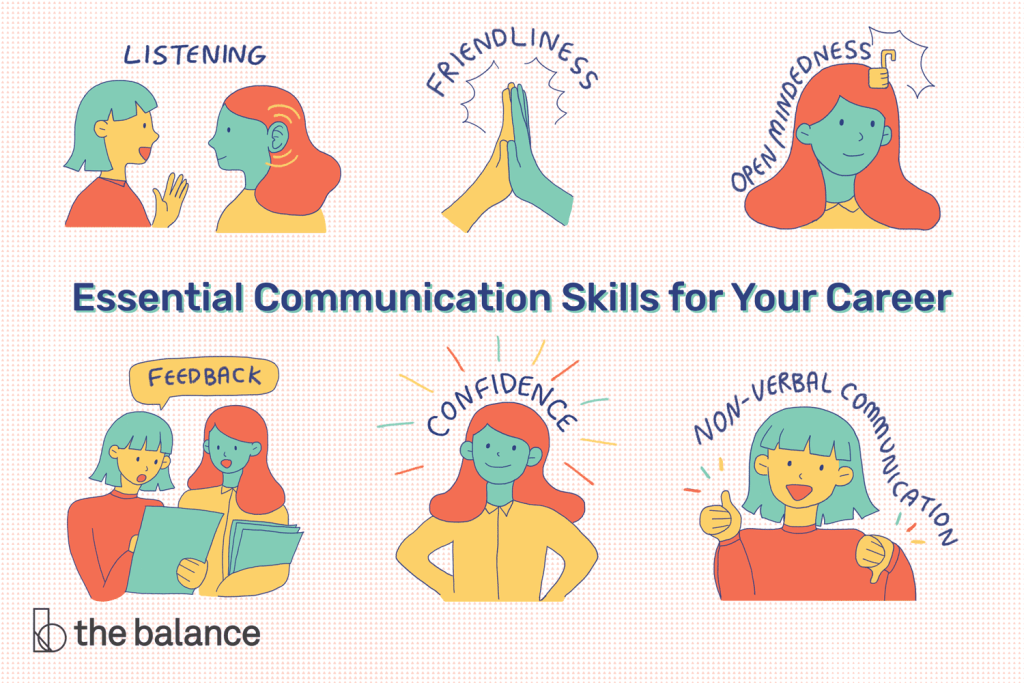
Clear and Concise Messaging
Avoid unnecessary words and jargon. Simple and direct communication saves time and avoids confusion.
Confidence in Communication
Confidence helps others trust your ideas and leadership abilities. This does not mean being loud—it means being clear and prepared.
Emotional Intelligence
Understanding emotions—both yours and others’—helps manage conversations, especially in stressful situations.
Adaptability
Different people require different communication styles. Adjusting your tone and approach improves understanding.
Feedback Skills
Providing and receiving feedback respectfully helps improve performance and teamwork.
Communication Skills in Teamwork and Collaboration
Strong communication is the foundation of effective teamwork.
In team environments, communication helps:
- Clarify roles and responsibilities
- Align goals and expectations
- Resolve conflicts early
- Encourage idea sharing
Teams that communicate well perform better and meet deadlines more consistently.
Communication Skills for Leaders and Managers
Leadership communication goes beyond basic interaction.
Important Leadership Communication Skills
- Giving clear instructions
- Motivating team members
- Handling conflicts professionally
- Conducting performance discussions
- Communicating vision and goals
Good leaders communicate with clarity, empathy, and consistency.
Common Workplace Communication Problems
Despite its importance, many professionals struggle with communication.
Common Issues Include:
- Misunderstood emails or messages
- Lack of listening
- Fear of speaking up
- Poor feedback delivery
- Cultural or language barriers
Recognizing these problems is the first step to improving communication.
How to Improve Communication Skills for the Workplace
1. Practice Active Listening
Focus fully on the speaker and avoid distractions.
2. Improve Writing Skills
Review emails before sending and use simple language.
3. Ask for Feedback
Constructive feedback helps identify communication gaps.
4. Observe Skilled Communicators
Learn by watching how experienced professionals communicate.
5. Take Communication Training
Workshops and online courses can strengthen professional communication skills.
6. Think Before Speaking
Organize your thoughts to avoid unclear or emotional responses.
Communication Skills in Remote and Hybrid Workplaces
Remote work has made communication skills more important than ever.
Key remote communication practices include:
- Clear written instructions
- Regular check-ins
- Professional video meeting etiquette
- Timely responses
Strong digital communication prevents isolation and confusion in remote teams.
The Role of Communication Skills in Career Growth
Professionals with strong communication skills:
- Build better professional networks
- Get noticed by management
- Handle responsibilities effectively
- Advance into leadership roles
Technical skills may get you hired, but communication skills help you grow.
Conclusion
Communication skills for the workplace are not optional—they are essential. From clear speaking and professional writing to active listening and emotional intelligence, strong communication improves performance, relationships, and career opportunities.
By practicing and refining these skills, professionals can create a more productive, respectful, and successful work environment.

Hi, this is a comment.
To get started with moderating, editing, and deleting comments, please visit the Comments screen in the dashboard.
Commenter avatars come from Gravatar.